

Miami Automated Reporting: 9 Flawless Secrets Revealed
by Sen Digital in Uncategorized on May 14, 2026Introduction to Reporting Methods
Understanding reporting methods is paramount for any organisation seeking to streamline its operations and improve decision-making processes. Among the various techniques available, Miami Automated Reporting stands out as a transformative approach that significantly enhances the efficiency of data presentation and analysis. This method utilises sophisticated algorithms and tools to automate the collection and dissemination of information, thereby reducing the time spent on manual reporting tasks.
By implementing Miami Automated Reporting, businesses can ensure accuracy and consistency in their reports. It minimises the risk of human error that often plagues traditional reporting methods and allows for real-time data updates. This capability is particularly beneficial in fast-paced environments where timely information is crucial for strategic planning and operational adjustments.
Moreover, adopting Miami Automated Reporting facilitates better resource allocation. With less time spent on generating reports, teams are free to focus on more strategic initiatives. This shift not only boosts productivity but also enhances employee satisfaction, as individuals can engage in tasks that require critical thinking and creativity rather than monotonous data entry.
In addition, the insights generated through Miami Automated Reporting can provide a competitive edge. By leveraging data analytics and visualisation tools integrated within the reporting framework, organisations can uncover trends and anomalies that might otherwise go unnoticed. This proactive approach to data management empowers companies to make informed decisions and pivot strategies effectively.
In conclusion, mastering various reporting methods, particularly Miami Automated Reporting, is essential for organisations aiming to thrive in today’s data-driven landscape. As companies continue to navigate complex market dynamics, the ability to utilise automated reporting techniques will undoubtedly play a critical role in their success.
Overview of Miami Automated Reporting
In today’s fast-paced business environment, organisations are increasingly turning to technology to streamline their processes and enhance efficiency. One such innovation is the Miami Automated Reporting system, designed to facilitate the generation and distribution of reports with minimal manual intervention. This system harnesses advanced algorithms and data analytics, allowing companies to transform raw data into insightful reports quickly and effectively.
The implementation of Miami Automated Reporting brings numerous advantages to businesses. Firstly, it significantly reduces the time spent on report preparation, enabling teams to focus on strategic decision-making rather than data compilation. By automating the reporting process, organisations can ensure real-time access to critical information, which is vital for timely decision-making. Furthermore, the accuracy of reports is greatly enhanced, reducing the margin for human error and fostering greater confidence in the data presented.
Moreover, Miami Automated Reporting is designed with user-friendliness in mind, featuring intuitive dashboards that allow stakeholders to customise their reporting needs effortlessly. This adaptability means that businesses of all sizes can tailor reports to reflect their unique requirements, driving more informed insights.
Adopting Miami Automated Reporting not only optimises operational efficiency but also supports a data-driven culture within organisations. Those interested in exploring more about these reporting advancements can delve deeper into available solutions at this link. In conclusion, embracing such innovative reporting methods can provide a competitive edge in today’s data-centric landscape.
What is Miami Automated Reporting?
In today’s fast-paced business environment, efficient data management and insightful reporting are crucial for success. Miami Automated Reporting emerges as a transformative solution designed to streamline the reporting process for businesses. By leveraging advanced algorithms and data integration techniques, it automates the generation of comprehensive reports, enabling professionals to focus on analysis rather than data collection.
At its core, Miami Automated Reporting allows organisations to consolidate disparate data sources into a single, coherent format. This not only improves accuracy but also significantly reduces the time spent on manual report compilation. Users can tailor the reporting framework to meet specific business needs, ensuring that the right metrics are highlighted. Furthermore, the platform’s user-friendly interface facilitates easy navigation, allowing even those with minimal technical expertise to generate sophisticated reports effortlessly.
Another notable advantage of Miami Automated Reporting is its ability to provide real-time insights. Business leaders can access up-to-date information, empowering them to make informed decisions swiftly. This agility is particularly valuable in today’s dynamic market scenarios, where timely data can be the difference between seizing an opportunity and missing out.
Moreover, the integration of visualisation tools within Miami Automated Reporting enhances the presentation of data, making it more digestible for stakeholders. By combining automated processes with intuitive design, businesses can enhance their strategic planning and operational efficiency, ultimately driving growth and sustainability in their respective industries.
Key Features of Miami Automated Reporting
The evolution of reporting tools has led to remarkable innovations, particularly with Miami Automated Reporting. This advanced system streamlines data collection and analysis, facilitating timely and accurate insights for businesses across various sectors. One of the key features of Miami Automated Reporting is its user-friendly interface, which allows professionals to generate comprehensive reports with minimal effort. The intuitive design means that even those without extensive technical knowledge can navigate the platform efficiently.
Moreover, Miami Automated Reporting excels in its customisation capabilities, enabling users to tailor reports to meet specific business needs. This flexibility enhances decision-making processes, as stakeholders can focus on the data most relevant to their objectives. Additionally, the integration of real-time analytics stands out as a significant advantage, empowering businesses to respond swiftly to emerging trends and operational challenges.
Another noteworthy aspect is the robust security measures embedded within Miami Automated Reporting. With data breaches becoming increasingly prevalent, ensuring the integrity and confidentiality of information is paramount. The system employs state-of-the-art encryption and access controls, providing peace of mind to users.
Furthermore, Miami Automated Reporting supports collaboration among teams by enabling seamless sharing of reports and insights. This fosters a culture of transparency and informed decision-making within organisations. For those keen to delve deeper into these features and enhance their understanding of automated reporting, I recommend exploring this informative video resource. Overall, the unique offerings of Miami Automated Reporting position it as a leader in the field, driving efficiency and effectiveness in reporting practices.
Traditional Reporting Methods Explained
In the ever-evolving landscape of data analysis and reporting, traditional methods play a pivotal role in informing decision-makers. These methods often rely on meticulous processes, which include gathering data from various sources, consolidating it into comprehensive reports, and delivering insights that drive business strategy. Central to this methodology is the use of established frameworks that ensure accuracy and clarity, allowing stakeholders to make informed choices.
One notable advancement in this realm is Miami Automated Reporting. By integrating automation into traditional reporting practices, organisations can significantly enhance efficiency and reduce the potential for human error. Miami Automated Reporting streamlines the data collection process, enabling teams to focus more on analysis rather than the tedious aspects of data management.
Moreover, traditional reporting methods often necessitate extensive training and expertise. However, with solutions like Miami Automated Reporting, users can access intuitive interfaces that reduce the learning curve. This democratization of data access not only empowers employees at all levels but also fosters a culture of data-driven decision-making.
As we consider the future of reporting, it is evident that while traditional methods provide a strong foundation, the integration of tools such as Miami Automated Reporting will revolutionise the way organisations harness data. By adopting a hybrid approach that combines the reliability of traditional processes with the efficiency of automation, businesses can ensure they remain competitive and responsive to market dynamics. Ultimately, the synergy between these methodologies will shape a more insightful and agile reporting landscape.
Common Practices in Traditional Reporting
In the landscape of business communications, traditional reporting remains a cornerstone for conveying essential information. This method often employs structured formats, ensuring clarity and consistency. Reports typically begin with an executive summary, followed by detailed sections that explore data insights, analysis, and recommendations. An important aspect of traditional reporting is the use of visual aids, such as graphs and charts, which enhance understanding by translating complex data into digestible formats.
One of the most notable advancements in this domain is Miami Automated Reporting. This innovative approach simplifies the reporting process, allowing for the generation of comprehensive reports with minimal manual intervention. By leveraging automation, businesses can save valuable time while focusing on data-driven decision-making. Furthermore, Miami Automated Reporting ensures that reports remain consistent and error-free, significantly reducing the potential for human error that is common in traditional methods.
Incorporating feedback loops is another common practice in traditional reporting. Regular reviews and updates foster a culture of continual improvement, which is vital for keeping reports relevant and actionable. The integration of Miami Automated Reporting into this feedback mechanism provides a robust framework for evolving reports based on real-time data insights.
Additionally, stakeholders are encouraged to engage with reporting processes actively. By maintaining open lines of communication, companies can tailor their reports to better address the needs and concerns of their audience. As Miami Automated Reporting continues to gain traction, it presents a unique opportunity for organisations to enhance traditional reporting methodologies, ultimately leading to more informed decision-making and strategic planning.
Limitations of Traditional Methods
In the rapidly evolving landscape of data analysis and reporting, traditional methods often fall short in meeting the demands of modern businesses. Conventional techniques, while foundational, can struggle with scalability, flexibility, and accuracy, leading to inefficiencies that are increasingly untenable in today’s fast-paced environment. The reliance on manual processes and outdated tools can result in significant delays and errors, hindering decision-making processes that require timely and reliable information.
The advent of solutions like Miami Automated Reporting offers a compelling alternative to these limitations. By automating data collection and reporting, businesses can not only streamline their operations but also enhance the accuracy and relevance of their insights. Traditional methods often involve time-consuming manual entry and compilation of reports, which can provoke human error and inconsistency. In contrast, Miami Automated Reporting systematically reduces these risks, ensuring that stakeholders receive up-to-date information consistently.
Moreover, the rigidity of traditional reporting systems makes it challenging for organisations to adapt to changing market dynamics. This inflexibility can stifle innovation and responsiveness. With Miami Automated Reporting, firms can swiftly modify their reporting parameters, allowing for insightful analysis tailored to immediate business needs.
In summary, while traditional methods have paved the way for data reporting, they no longer suffice in an age where agility and precision are paramount. Transitioning to modern solutions like Miami Automated Reporting not only mitigates the shortcomings of traditional systems but also equips organisations with the tools necessary to thrive in a competitive landscape.
Comparing Miami Automated Reporting and Traditional Methods
In recent years, the evolution of technology has significantly influenced the way businesses manage and analyse data. One notable advancement is Miami Automated Reporting, which offers a compelling alternative to traditional reporting methods. The traditional approach typically involves manual data collection and analysis, often resulting in time-consuming processes that are prone to human error. In contrast, Miami Automated Reporting streamlines these processes by utilising sophisticated algorithms that automatically gather, process, and present data in an easily digestible format.
The efficiency of Miami Automated Reporting cannot be overstated. Businesses can now access real-time insights, allowing for quicker decision-making and enhanced responsiveness to market changes. This immediacy contrasts sharply with traditional methods, where reports may arrive weeks after data has been collected, ultimately hindering timely strategic initiatives. Furthermore, the automation aspect reduces the likelihood of errors that can arise from manual data entry, ensuring a higher level of accuracy in reporting.
Another significant advantage of Miami Automated Reporting is its capability to customise reports according to specific business needs. This flexibility is often limited in traditional systems, where pre-defined templates may not cater to unique requirements. The adaptability of automation allows organisations to focus on what truly matters, thereby fostering a more agile business environment.
In summary, the shift towards Miami Automated Reporting represents a paradigm change in how data is handled, offering greater efficiency, accuracy, and customisation compared to traditional methods. Businesses that embrace this technological shift are likely to gain a competitive edge in today’s fast-paced market.
Efficiency and Speed
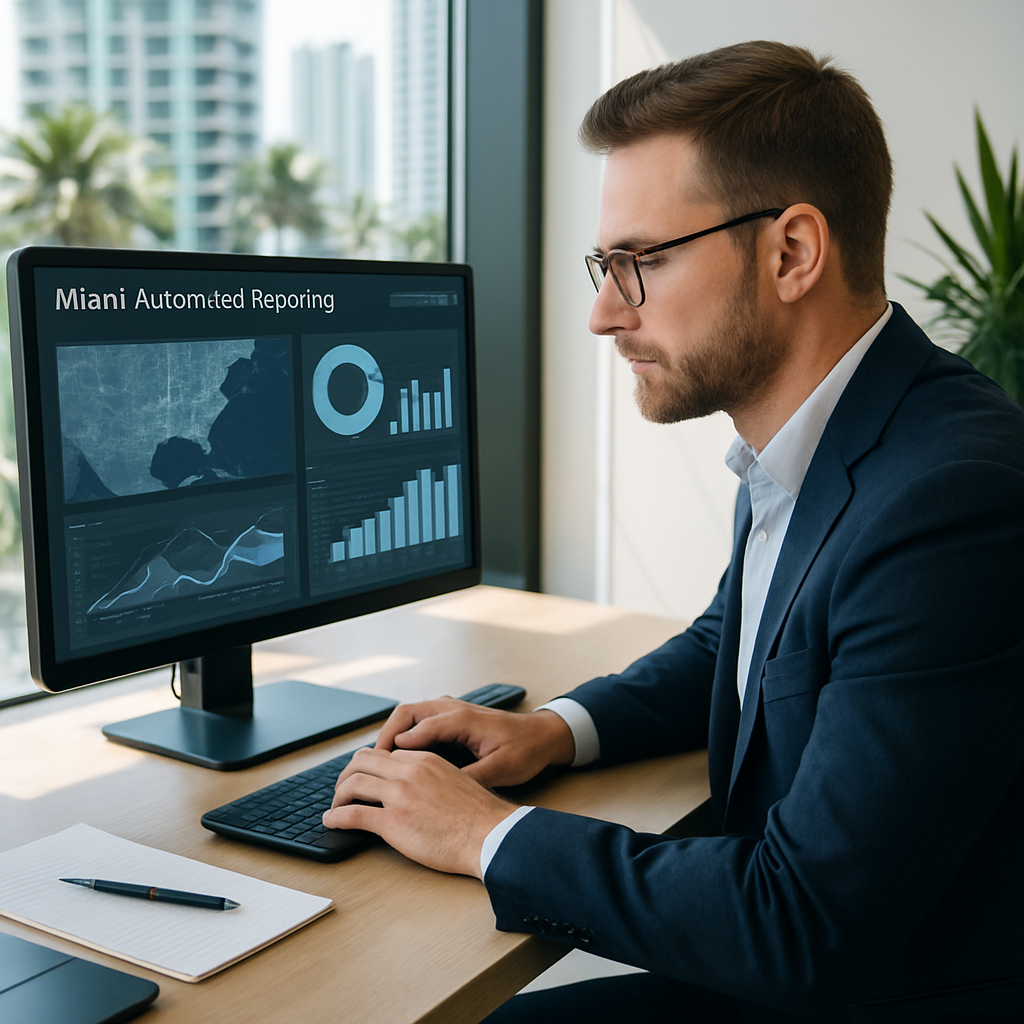
In today’s fast-paced business environment, the ability to deliver results quickly and efficiently is paramount. Companies are increasingly seeking solutions that not only enhance productivity but also streamline operations. One such innovative approach is Miami Automated Reporting, a system designed to transform the way data is processed and insights are generated. By automating the reporting process, organisations can eliminate the time-consuming manual tasks that often lead to inefficiencies and delays.
The integration of Miami Automated Reporting into existing workflows ensures that critical data is available at a moment’s notice. This immediacy allows businesses to make informed decisions rapidly, responding to market changes with agility. Furthermore, the accuracy of automated reports significantly reduces the risk of human error, promoting reliability in data-driven strategies.
As competition intensifies, companies that adopt Miami Automated Reporting will find themselves at a distinct advantage. The system not only improves operational speed but also enhances collaboration across teams, as everyone has access to the same up-to-date information. This cohesive approach fosters a culture of transparency and accountability, essential ingredients for sustained success.
Investing in Miami Automated Reporting is more than just a technological upgrade; it is a strategic move that aligns with the growing demand for efficiency in every facet of business. As organisations navigate the complexities of modern markets, embracing such solutions will be key to thriving in an era where time truly is money.
Accuracy and Data Integrity
In today’s data-driven landscape, ensuring precision and reliability in reporting is paramount for organisations aiming to make informed decisions. The significance of robust data integrity cannot be overstated, particularly in realms where regulatory compliance and strategic forecasting are at stake. A well-structured approach to data management enables companies to harness insights effectively while mitigating risks associated with inaccuracies.
A key innovation in this field is Miami Automated Reporting, which streamlines the data collection and analysis process. By automating reporting workflows, businesses not only enhance efficiency but also bolster the accuracy of the information generated. When combined with rigorous validation protocols, Miami Automated Reporting becomes an indispensable tool for maintaining data integrity, allowing teams to focus on interpreting results rather than wrestling with discrepancies.
Moreover, as organisations increasingly rely on real-time data for decision-making, the need for a trustworthy reporting mechanism becomes even more critical. Miami Automated Reporting facilitates immediate access to accurate data, ensuring stakeholders are equipped with reliable information. This immediacy not only enhances strategic planning but also fosters a culture of transparency and accountability within the organisation.
Ultimately, leveraging Miami Automated Reporting can significantly transform how businesses approach their data management strategies. By prioritising accuracy and integrity, organisations set themselves up for sustained success in a competitive environment, driving not only performance but also long-term growth. In a world where data is currency, those that invest in precision will undoubtedly reap the rewards.
Cost-Effectiveness
In today’s competitive landscape, the pursuit of efficiency and value is paramount for organisations seeking sustainable growth. Companies are increasingly recognising the significance of optimising resources to achieve maximum output with minimal expenditure. This imperative has led to the adoption of sophisticated solutions that enhance operational performance while ensuring fiscal prudence.
One such innovative solution is Miami Automated Reporting, designed to streamline reporting processes across various sectors. This tool not only reduces the time spent on data compilation but also minimises the human errors that can arise from manual reporting. By implementing Miami Automated Reporting, organisations can focus their efforts on strategic decision-making rather than being bogged down by administrative tasks.
Furthermore, the integration of Miami Automated Reporting can lead to substantial cost savings. By automating routine reporting tasks, businesses can reallocate their workforce towards more value-adding activities, thus enhancing overall productivity. As a result, companies witness a significant reduction in operational costs, providing them with a competitive edge in the market.
Additionally, the analytical capabilities embedded within Miami Automated Reporting facilitate insightful data interpretation, allowing organisations to make informed decisions swiftly. This agility in decision-making is critical in a fast-paced business environment where timely interventions can make all the difference.
In summary, the move towards automated reporting solutions like Miami Automated Reporting not only bolsters organisational efficiency but also safeguards financial resources, proving that investing in such technologies is a prudent strategy for contemporary businesses aiming to thrive.
Real-World Applications of Miami Automated Reporting
In today’s data-driven landscape, the significance of automated reporting systems cannot be understated, especially in fast-paced environments such as finance and marketing. The implementation of Miami Automated Reporting has emerged as a groundbreaking solution for professionals seeking efficiency and precision. By harnessing advanced algorithms and real-time data integration, this system streamlines the reporting process, allowing organisations to make informed decisions swiftly.
One of the most compelling real-world applications of Miami Automated Reporting lies within the financial sector. Here, analysts can generate comprehensive reports on market trends and portfolio performance within mere minutes, rather than dedicating hours to traditional methods. This not only enhances productivity but also enables timely responses to market fluctuations, which is crucial for maintaining a competitive edge.
Moreover, businesses in the marketing domain benefit immensely from the deployment of Miami Automated Reporting. Campaign performance can be evaluated instantaneously, providing marketers with insights that drive strategy adjustments in real-time. This agility fosters a proactive approach, allowing companies to capitalise on emerging opportunities and mitigate potential risks quickly.
Furthermore, the integration of Miami Automated Reporting into operational workflows promotes greater collaboration across departments. Stakeholders can access uniform data at any moment, ensuring that everyone is aligned with the organisation’s objectives. In essence, the adoption of such an automated reporting system not only enhances efficiency but also cultivates a culture of data-driven decision-making that is essential for success in the modern marketplace.
Case Studies and Success Stories
In today’s rapidly evolving business landscape, the significance of substantiating claims with tangible evidence cannot be overstated. This is particularly true in sectors where decision-makers rely heavily on data-driven insights. A prime example of this can be seen with Miami Automated Reporting, a sophisticated solution that has transformed how organisations manage and interpret their data.
By implementing Miami Automated Reporting, companies have reported significant enhancements in efficiency and accuracy. One case study from a leading financial institution illustrates how this tool allowed them to reduce reporting time by over 50%, enabling their teams to focus on strategic initiatives rather than routine data collection. The seamless integration with existing systems further exemplifies how Miami Automated Reporting can be tailored to meet the unique needs of various industries.
Moreover, success stories from small to medium-sized enterprises reveal that even with limited resources, the implementation of Miami Automated Reporting has led to improved decision-making capabilities. These organisations have leveraged the tool to gain actionable insights, ultimately driving growth and enhancing customer satisfaction.
In summary, the evidence gathered from diverse case studies and success narratives underscores the transformative potential of Miami Automated Reporting. As businesses increasingly seek innovative solutions to remain competitive, the adoption of such technologies is not merely advantageous but essential for sustainable success.
Conclusion: Which Method is Better for Your Business?
When considering the most effective approach for your business, it is crucial to evaluate various methods in relation to your specific needs and goals. The landscape of modern business reporting is rapidly evolving, and tools such as Miami Automated Reporting have emerged as pivotal resources for enhancing efficiency and accuracy. In a world where data-driven decisions can make or break an organisation, automating reporting tasks can lead to significant time savings and improved insights.
Firstly, the choice between manual reporting and automated systems hinges on your team’s capacity and the volume of data processed regularly. Many organisations find that Miami Automated Reporting not only streamlines the reporting process but also reduces the likelihood of human error, which is paramount in maintaining data integrity. The agility offered by these automated solutions enables businesses to respond promptly to market changes and internal demands.
Moreover, implementing Miami Automated Reporting can foster a culture of accountability and transparency within your organisation. With real-time access to reports, stakeholders can make informed decisions that align with strategic objectives. This capability is particularly beneficial for companies that operate in rapidly changing industries, where the need for up-to-date information is critical.
In conclusion, while both methods have their merits, the advantages of embracing Miami Automated Reporting are becoming increasingly clear. By leveraging automation, your business can not only enhance operational efficiency but also gain a competitive edge in today’s data-centric market. Ultimately, the decision should align with your company’s unique requirements, resources, and vision for the future.
Making the Right Choice for Your Reporting Needs
In today’s rapidly evolving business landscape, choosing the right tools for reporting is crucial for informed decision-making. Understanding your organisation’s unique requirements will significantly influence this process. When considering options, one cannot overlook the burgeoning trend of Miami Automated Reporting. This innovative solution streamlines data analysis, ensuring that reports are not only comprehensive but also easily interpretable.
The benefits of Miami Automated Reporting extend beyond mere efficiency. By automating the data collection and reporting processes, organisations can minimise human error and maximise accuracy. This is particularly vital in an age where data integrity is paramount. Furthermore, this system allows for real-time reporting, empowering professionals to make timely decisions based on the most current data.
Moreover, Miami Automated Reporting caters to a variety of sectors, from finance to healthcare, ensuring that tailored solutions are always within reach. The flexibility of this approach means that companies can customise their reporting needs, thereby enhancing the relevance of the information presented. In a world where insights drive success, having access to such robust reporting frameworks is indispensable.
Ultimately, the choice of reporting tools should align with your organisational goals and the specific demands of your industry. Investing in solutions like Miami Automated Reporting can lead to more strategic operations and a stronger competitive edge. As businesses seek to adapt and thrive in a complex environment, making informed decisions about reporting capabilities has never been more critical.