

12 Proven Ways Miami Automated Reporting is Safe with AI
by Sen Digital in Uncategorized on May 14, 2026Introduction to Miami Automated Reporting
In the ever-evolving landscape of business intelligence, Miami Automated Reporting emerges as a pivotal tool for organisations seeking to streamline their data management processes. This innovative system significantly enhances the efficiency of reporting by automating the collection, analysis, and presentation of crucial data insights. With the ability to tailor reports to specific organisational needs, Miami Automated Reporting empowers decision-makers to focus on strategic initiatives rather than getting bogged down by tedious manual data compilation.
The integration of Miami Automated Reporting into existing frameworks not only boosts productivity but also mitigates the risks associated with human error. By ensuring that data is accurately sourced and analysed in real-time, businesses can make informed decisions based on the most current information available. Furthermore, the versatility of this automated solution means that it can cater to various industries, adapting to the unique demands of each sector.
Embracing Miami Automated Reporting also means enhancing collaboration within teams. By facilitating easy access to pertinent reports and analyses, stakeholders can engage more readily in discussions that drive innovation and improvement. As organisations navigate an increasingly data-driven world, leveraging tools like Miami Automated Reporting will be essential in maintaining a competitive edge. Ultimately, this system not only transforms reporting practices but also shapes the future of how organisations interact with their data, ensuring they are well-equipped to respond to the challenges and opportunities that lie ahead.
What is Automated Reporting?
In today’s fast-paced business environment, the necessity for timely and accurate data analysis cannot be overstated. Automated reporting systems streamline the process of data collection and presentation, allowing organisations to make informed decisions swiftly. By leveraging technology, businesses can eliminate the manual effort traditionally involved in compiling reports, leading to significant time and resource savings.
One prominent example of this innovation is Miami Automated Reporting, which facilitates the creation of comprehensive reports without the need for constant human oversight. This system not only aggregates data from multiple sources but also formats and visualises it in a user-friendly manner, making insights readily accessible. Such efficiency empowers professionals to concentrate on strategic initiatives rather than mundane data entry tasks.
Furthermore, Miami Automated Reporting enhances accuracy by reducing the human error factor inherent in traditional reporting methods. By implementing automated processes, organisations can trust that their data is consistent and reliable, ultimately fostering a culture of data-driven decision-making. As stakeholders increasingly demand transparency and real-time insights, the role of automated reporting becomes ever more crucial.
Notably, businesses seeking to optimise their operations should consider the benefits of integrating automated reporting solutions into their workflows. For a deeper exploration into this transformative technology, visit this resource. The shift to Miami Automated Reporting represents not just an operational upgrade, but a strategic advantage in an increasingly competitive landscape. Embracing such innovations will undoubtedly position enterprises for greater success in the future.
The Role of AI in Reporting
In today’s data-driven environment, the integration of artificial intelligence into reporting processes is proving to be transformative. Businesses seeking efficiency and accuracy are increasingly turning to solutions like Miami Automated Reporting. By leveraging AI, organisations can automate the collection, analysis, and presentation of data, significantly reducing the time it takes to generate comprehensive reports. This advancement not only streamlines workflows but also enhances decision-making capabilities by providing timely insights.
The ability of AI to process vast amounts of data quickly allows for real-time reporting, which is essential in fast-paced industries. With Miami Automated Reporting, companies can receive updates and analyses that reflect the most current data trends, enabling proactive rather than reactive strategies. Moreover, AI algorithms can identify patterns and anomalies in data that may go unnoticed by human analysts, thereby improving the quality of insights derived from reports.
Furthermore, the customisation potential offered by Miami Automated Reporting means that organisations can tailor reports to meet specific needs, ensuring that stakeholders receive relevant information in the format they prefer. This adaptability is crucial in a landscape where data requirements are constantly evolving.
As firms continue to embrace these technological advancements, AI’s role in reporting will undoubtedly expand, reshaping how businesses interpret their data. The future of reporting lies in harnessing innovations like Miami Automated Reporting to drive efficiency, accuracy, and strategic foresight. As we progress, organisations that adeptly integrate these AI solutions will be better positioned to thrive in competitive markets.
Benefits of Artificial Intelligence in Reporting
In today’s rapidly evolving business landscape, the integration of advanced technologies enhances operational efficiency and decision-making processes. Particularly noteworthy is the role of AI in the realm of reporting. Automation, driven by artificial intelligence, offers businesses profound advantages, enabling them to streamline their reporting processes significantly.
One prominent example of this can be seen in Miami Automated Reporting. This innovative solution not only facilitates the collection and analysis of vast data sets but does so with remarkable speed and accuracy. By employing machine learning algorithms, it can identify trends and insights that would otherwise remain hidden in manual reports. Consequently, businesses can make informed decisions more quickly, ensuring they remain competitive in an increasingly data-driven environment.
Moreover, the Miami Automated Reporting system reduces the likelihood of human error, which is often a significant risk in traditional reporting methods. This reliability fosters greater confidence in the data presented, allowing stakeholders to base their strategies on sound information. Furthermore, the time saved through automation can be redirected towards more strategic initiatives, enhancing overall productivity.
Additionally, the ability to customise reports through Miami Automated Reporting allows organisations to tailor their insights to specific audience needs, ensuring that the most relevant data is presented effectively. As organisations strive for agility in their operations, embracing such technology is not merely a trend but a necessity for sustained growth and efficiency. For an in-depth look into the transformative power of AI in reporting, consider exploring this engaging video resource.
Enhanced Accuracy and Reliability
In today’s fast-paced business landscape, the demand for precision and dependability in reporting has never been greater. Organisations increasingly rely on sophisticated solutions to streamline their operations and ensure the integrity of their data. Within this context, Miami Automated Reporting emerges as a pivotal tool, offering a seamless approach that enhances both the accuracy and reliability of essential business insights.
By integrating advanced algorithms and real-time data processing capabilities, Miami Automated Reporting minimises the risks associated with manual reporting. This innovative system not only mitigates human error but also guarantees that stakeholders receive timely and precise information. As businesses operate in increasingly competitive environments, the need for trustworthy reporting becomes paramount.
Moreover, the implementation of Miami Automated Reporting contributes significantly to operational efficiency. Automated systems reduce the time spent on data compilation and analysis, allowing teams to focus on strategic decision-making rather than administrative tasks. This not only streamlines workflows but also fosters a culture of data-driven decision-making that can propel organisations forward.
In essence, adopting Miami Automated Reporting equips companies with the tools they need to navigate complexities and challenges with confidence. The enhanced accuracy and reliability provided by this system are essential for fostering trust among stakeholders and ensuring the longevity and competitiveness of businesses in a dynamic marketplace. Embracing such technology is not merely an option; it has become a necessity for those aiming to thrive in the modern economy.
Time-Saving Features of Automated Reporting
In today’s fast-paced business landscape, efficiency is paramount, and organisations are increasingly seeking solutions that enhance productivity. Automated reporting tools have emerged as a vital resource, delivering significant time-saving benefits. One standout example is Miami Automated Reporting, which streamlines the data analysis process by automating routine tasks such as data collection, aggregation, and presentation. This allows professionals to redirect their focus from time-consuming report generation to meaningful insight extraction.
The use of Miami Automated Reporting drastically reduces the potential for human error, a common pitfall in traditional reporting methods. By relying on automated systems, companies can ensure that their reports are both accurate and consistent, minimising the time spent on revisions and corrections. Additionally, these tools often feature customizable dashboards, enabling users to tailor reports to their specific needs effortlessly.
Another crucial advantage offered by Miami Automated Reporting is the ability to generate reports in real-time. This instant access to data facilitates quicker decision-making, empowering organisations to respond to market changes with agility. Instead of waiting days for manual reporting cycles to complete, stakeholders can obtain and analyse relevant data within minutes.
Moreover, with the incorporation of advanced analytics and visualisation capabilities, Miami Automated Reporting simplifies the interpretation of complex data sets. This not only enhances comprehension but also ensures that insights are communicated clearly to all team members, fostering collaborative strategies. Ultimately, the integration of automated reporting solutions is a strategic investment that supports businesses in achieving their objectives more efficiently.
Key Features of Miami Automated Reporting Solutions
In today’s fast-paced business environment, organisations are increasingly turning to technological advancements to enhance efficiency and streamline operations. Among these innovations, automated reporting solutions have emerged as a critical component for businesses aiming to harness data effectively. One notable offering in this realm is Miami Automated Reporting.
One of the key features of Miami Automated Reporting solutions is their ability to integrate seamlessly with existing data systems. This integration ensures that businesses can effortlessly pull relevant information from various sources, allowing for real-time updates and comprehensive reporting. Additionally, the user-friendly interfaces of these systems empower users to generate customised reports without the need for extensive technical expertise. This functionality is particularly advantageous for organisations looking to enhance productivity without overwhelming their staff with complex processes.
Moreover, the analytical capabilities embedded within Miami Automated Reporting facilitate deeper insights into business performance. Users can leverage advanced analytics and visualisations to identify trends and make informed decisions swiftly. This level of insight not only aids in day-to-day operations but also plays a pivotal role in strategic planning.
Lastly, Miami Automated Reporting solutions offer robust security features, ensuring that sensitive data is protected against unauthorised access. This aspect is paramount, particularly in industries where data integrity and confidentiality are critical.
In conclusion, the comprehensive functionalities of Miami Automated Reporting solutions provide businesses with the tools necessary to navigate the complexities of data management effectively. As organisations continue to seek efficiency and clarity in their reporting processes, such solutions will undoubtedly remain at the forefront of business technology.
User-Friendly Interfaces
In today’s fast-paced digital landscape, the significance of intuitive platforms cannot be overstated. A user-friendly interface serves as a bridge between complex functionalities and the end user, ensuring that individuals can navigate systems with ease. This is particularly crucial for industries relying on sophisticated tools, such as Miami Automated Reporting. By prioritising simplicity and accessibility, organisations can empower users to harness the full potential of advanced reporting technologies without the burden of extensive training.
The design of a user interface not only impacts usability but also influences productivity. When users can interact seamlessly with systems like Miami Automated Reporting, they are less likely to encounter frustration, thereby increasing overall efficiency. Elements such as clear navigation, coherent layout, and responsive design are paramount. Customisation options further enhance the appeal, allowing users to tailor their experience according to individual preferences.
Moreover, the integration of feedback mechanisms can refine user experience continually. As organisations deploy tools such as Miami Automated Reporting, soliciting user insights can reveal pain points, leading to iterative improvements. This proactive approach fosters a culture of engagement, where users feel their needs are valued.
Ultimately, a commitment to cultivating user-friendly interfaces transcends mere aesthetics; it reflects an organisation’s dedication to enhancing performance and satisfaction. By leveraging the advanced capabilities of platforms like Miami Automated Reporting, businesses can significantly improve their data handling processes, ultimately driving better decision-making and outcomes.
Customizable Reporting Options
In today’s data-driven environment, the ability to tailor reporting to meet specific business needs is paramount. Customisation allows professionals to dissect information in a manner that is most relevant to their strategic objectives. Among various solutions available in the market, Miami Automated Reporting stands out due to its flexibility and user-centric approach, enabling users to define parameters that align precisely with their operational requirements.
This bespoke capability empowers businesses to generate reports that not only reflect their unique metrics but also facilitate informed decision-making. With Miami Automated Reporting, users can select from an array of data visualisations and formats, ensuring that complex datasets are easily digestible and actionable. The platform’s intuitive interface allows for a seamless experience, even for those with minimal technical expertise, making sophisticated analytical tools accessible to a broader audience.
Moreover, the integration of real-time data into these reports enhances the overall analytical framework, enabling businesses to remain agile in their response to market dynamics. The reliability of Miami Automated Reporting in producing consistent and accurate results further reinforces its position as a leader in the sector. As businesses increasingly recognise the importance of tailored insights, the demand for such customisable solutions will only grow. The capability to adapt reports to specific niches not only enhances operational efficiency but significantly contributes to overall strategic success, positioning Miami Automated Reporting as an invaluable asset in the toolkit of modern organisations.
Case Studies: Success Stories in Miami
In recent years, Miami has emerged as a hub for innovative business solutions, particularly in the realm of data management and reporting. One notable success story in this dynamic environment involves the implementation of Miami Automated Reporting systems across various sectors. These systems have significantly enhanced operational efficiency, enabling organisations to generate comprehensive reports with minimal manual input.
A prime example can be found within a local healthcare provider that adopted Miami Automated Reporting to streamline patient data analysis. By integrating this technology, the provider reduced report generation time by over 50%, allowing medical staff to focus on patient care rather than administrative tasks. This transformation not only improved productivity but also led to better patient outcomes, demonstrating the tangible benefits of automation.
Another success story involves a financial services firm that utilised Miami Automated Reporting to bolster its compliance and auditing processes. The firm faced challenges in collating vast amounts of data from various sources, which was both time-consuming and prone to error. With the adoption of automated reporting, the firm achieved a level of accuracy and speed that previously seemed unattainable. This advancement not only enhanced their regulatory compliance but also improved client satisfaction due to timely and precise reporting.
Ultimately, these case studies underscore the transformative impact of Miami Automated Reporting in diverse industries. By leveraging cutting-edge technology, businesses in Miami are not only improving efficiency but also setting new standards for excellence in reporting and data management. As the trend continues to gain traction, it is clear that automated reporting will play a crucial role in shaping the future of organisational operations in the region.
How Businesses Increased Efficiency with AI
In recent years, the integration of intelligent technologies has transformed the operational landscape for numerous businesses. Companies are increasingly leveraging AI to streamline processes and boost productivity across various sectors. A notable example of this trend is the innovative adoption of Miami Automated Reporting, which has revolutionised how organisations manage their data reporting tasks. By utilising AI-driven solutions, businesses can automate routine reporting functions, significantly reducing the time and resources previously required.
The introduction of Miami Automated Reporting has enabled companies to gather and analyse data with unprecedented speed and accuracy. This technology eliminates human error, ensuring that reports are not only timely but also reliable. As a result, decision-makers can access critical insights faster, allowing for more informed strategic choices. Moreover, the scalability of Miami Automated Reporting allows businesses to adapt effortlessly to changing data requirements, fostering a more agile operational approach.
Furthermore, businesses implementing Miami Automated Reporting experience enhanced employee engagement as staff are liberated from monotonous tasks. This shift permits teams to focus on more value-added activities, promoting innovation and creativity within the workplace. Companies that embrace such AI solutions also position themselves ahead of their competitors, showcasing their commitment to leveraging technology for operational excellence.
In conclusion, the rise of AI, epitomised by solutions like Miami Automated Reporting, signifies a paradigm shift in how businesses enhance efficiency. By adopting these technologies, organisations are not only streamlining their processes but also laying the groundwork for sustainable growth in an increasingly competitive market.
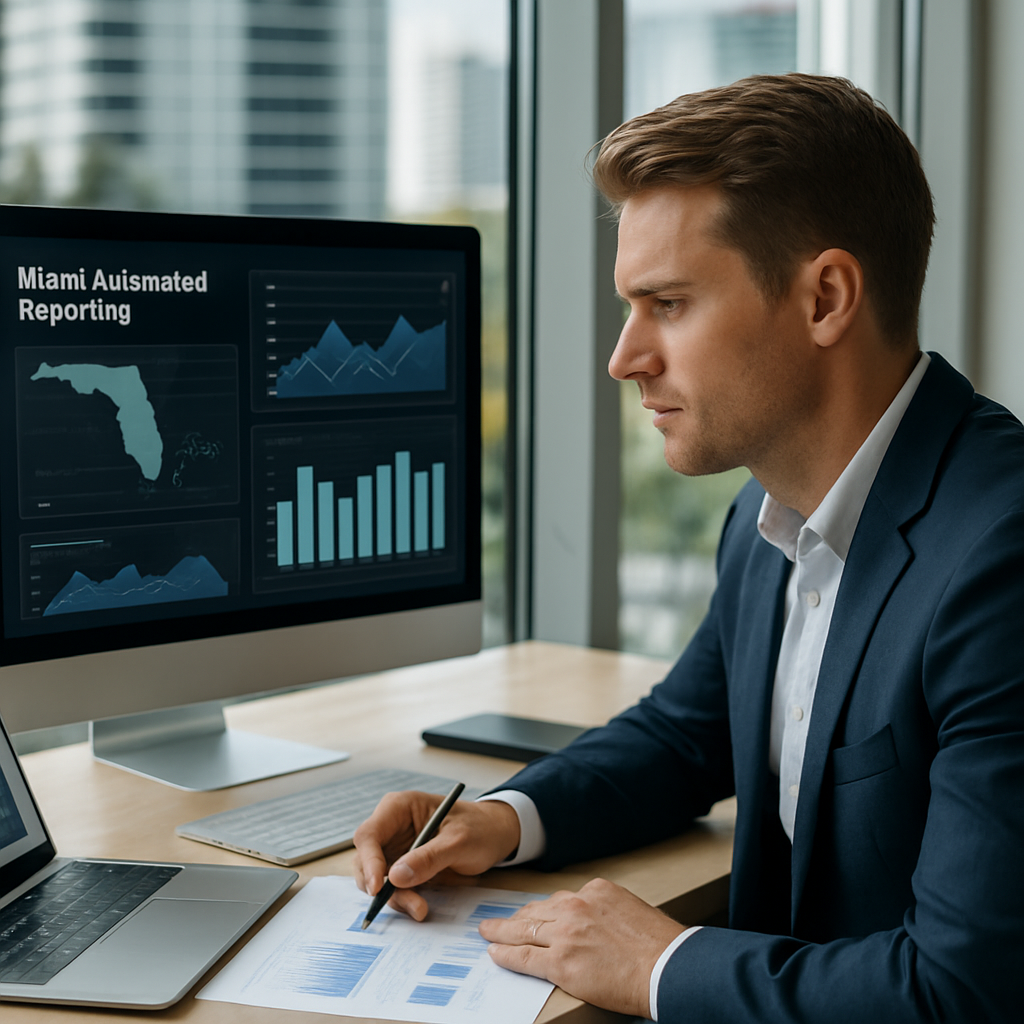
Positive Impact on Decision-Making Processes
In today’s fast-paced business landscape, leveraging advanced technologies has become imperative for informed decision-making. Among various innovations, Miami Automated Reporting stands out as a pivotal tool that significantly enhances the precision and efficiency of business analysis. By automating the compilation and presentation of data, organisations can swiftly access relevant insights, which in turn fosters a more agile decision-making environment.
Implementing Miami Automated Reporting not only reduces the likelihood of human error but also streamlines the reporting process. This allows professionals to focus on strategic planning rather than being bogged down by time-consuming data gathering. The ability to generate real-time reports empowers decision-makers with up-to-date information, facilitating timely responses to market changes and internal dynamics.
Moreover, the analytical capabilities embedded within Miami Automated Reporting provide a clearer understanding of complex data sets. By visualising trends and correlations, stakeholders can make more informed choices, enhancing overall business performance. The integration of this technology into daily operations cultivates a culture of data-driven decision-making, essential for maintaining a competitive edge.
As organisations continue to evolve, adopting tools like Miami Automated Reporting will be crucial. It not only supports transparency and accountability but also aligns with best practices in corporate governance. Ultimately, the positive impact on decision-making processes derived from this innovative reporting solution cannot be overstated; it transforms the way businesses interpret their operations and strategise for future growth.
Challenges and Considerations
In today’s fast-paced business environment, companies are increasingly adopting automated reporting solutions to enhance efficiency and accuracy. One notable example is Miami Automated Reporting, which has gained traction for its ability to streamline data processes. However, the implementation of such technology is not without its challenges.
Organisations must consider the initial investment required for adopting Miami Automated Reporting systems. This includes not only financial costs but also the time and resources needed for staff training and integration with existing systems. Additionally, companies must ensure that the data being used is of high quality; otherwise, the outputs of Miami Automated Reporting could lead to misleading insights and poor decision-making.
Furthermore, there is the challenge of data security. As automation becomes more prevalent, safeguarding sensitive information within Miami Automated Reporting platforms is crucial. A breach could result in significant reputational damage and financial loss. Therefore, organisations should implement robust security measures and continuously monitor their systems.
Moreover, it is vital to maintain a human touch even in an automated environment. Stakeholders should not become overly reliant on Miami Automated Reporting, as human oversight is essential for nuanced decision-making. The balance between automation and human judgement can be tricky but is imperative for long-term success.
Finally, staying updated with evolving technologies is a continuous challenge. Companies must remain agile and willing to adapt their Miami Automated Reporting strategies in response to industry trends and advancements. By addressing these considerations, organisations can leverage the full potential of automated reporting while mitigating associated risks.
Data Security and Privacy Concerns
In today’s digital landscape, safeguarding sensitive information has become paramount for businesses across various sectors. With the surge in cyber threats and data breaches, organisations must adopt robust strategies to ensure data integrity and protect consumer privacy. One emerging solution that has gained significant traction is Miami Automated Reporting. This innovative tool not only streamlines data management but also fortifies security measures against potential intrusions.
The rise of remote work and digital transactions has intensified privacy concerns, making it essential for companies to implement comprehensive data governance frameworks. Miami Automated Reporting offers a multi-layered approach to data security, enabling firms to monitor their data access and usage effectively. By leveraging advanced analytics and real-time reporting, businesses can identify vulnerabilities and respond swiftly to any suspicious activities.
Moreover, regulatory compliance continues to evolve, with stringent laws such as GDPR and CCPA raising the stakes for organisations handling personal data. Implementing Miami Automated Reporting allows companies to maintain compliance more efficiently, as it provides detailed records and insights necessary for audits and assessments. This not only mitigates the risk of hefty fines but also reinforces customer trust—an invaluable asset in today’s marketplace.
As organisations navigate the complexities of modern data security, adopting tools like Miami Automated Reporting is not merely a choice but a necessity. By prioritising both data security and privacy, businesses can not only safeguard themselves against threats but also enhance their reputation and customer loyalty. Therefore, investing in sophisticated reporting systems is a strategic move that aligns with the overarching goal of sustainable business practices.
The Need for Ongoing Training and Support
In an ever-evolving professional landscape, it is imperative for businesses to recognise the significance of continuous training and support. This is particularly true when considering innovative solutions such as Miami Automated Reporting, which can transform data handling and decision-making processes. Without ongoing education and reinforcement, employees may struggle to fully leverage the capabilities of such advanced tools.
Regular training sessions not only enhance employees’ proficiency with Miami Automated Reporting, they also foster a culture of adaptability within the organisation. As new features and updates are introduced, teams that are well-supported are better positioned to utilise these enhancements effectively. Moreover, the dynamic nature of technology necessitates that professionals remain informed about best practices and emerging trends in data management.
Support mechanisms, such as mentoring and peer networks, can further complement formal training. Employees who have access to experienced colleagues are more likely to navigate challenges associated with Miami Automated Reporting successfully. This collaborative environment encourages knowledge sharing and innovation, which are crucial for maintaining a competitive edge.
Ultimately, ongoing training and robust support structures not only ensure that teams are equipped to handle Miami Automated Reporting efficiently but also contribute to overall employee satisfaction and retention. By investing in the continuous development of their workforce, organisations can cultivate a skilled, agile team that is prepared to meet the demands of a rapidly changing market. This strategic approach highlights the importance of prioritising education and support in fostering both individual and organisational success.
Future Trends in Miami Automated Reporting
As businesses increasingly embrace digital transformation, the landscape of data management is evolving meticulously. One of the most significant advancements lies in the realm of Miami Automated Reporting. This innovative approach not only streamlines data analysis but also enhances decision-making efficiency across various sectors. Looking ahead, we anticipate several key trends shaping the future of Miami Automated Reporting.
Firstly, the integration of artificial intelligence and machine learning will profoundly impact reporting capabilities. By leveraging these technologies, organisations will be able to generate real-time reports that adapt to changing data sets, providing insights that are both timely and relevant. This means that the traditional static reports will become obsolete, giving way to dynamic dashboards that visualise trends instantly.
Moreover, the increasing focus on data privacy and security will drive the development of more robust compliance frameworks within Miami Automated Reporting systems. Companies will have to navigate complex regulations, necessitating reporting tools that not only meet legal requirements but also build trust with clients and stakeholders.
Another trend is the rise of customisation in reporting solutions. Businesses in Miami are demanding tailored analytics that cater specifically to their unique operational needs. As a result, providers of Miami Automated Reporting will need to adopt a more client-centric approach, ensuring flexibility in their offerings to accommodate diverse requirements.
Finally, the ongoing shift towards cloud-based solutions will enhance accessibility and collaboration. Teams will be able to access automated reports from anywhere, facilitating remote work and informed decision-making. In conclusion, the future of Miami Automated Reporting is poised for transformative growth, driven by technological innovation and a commitment to meeting the evolving needs of businesses.
The Growing Role of Machine Learning
In recent years, advancements in technology have significantly transformed various industries, leading to a notable shift towards automation and data-driven decision-making. Among the most impactful developments is the integration of machine learning into everyday business operations. This paradigm shift is particularly evident in sectors such as finance, healthcare, and marketing, where organisations increasingly rely on sophisticated algorithms to enhance efficiency and gain competitive advantages.
One domain where machine learning has yielded remarkable benefits is reporting. Companies are now adopting solutions like Miami Automated Reporting to streamline their reporting processes. This approach not only reduces the time spent on manual data entry and analysis but also improves the accuracy of reports. By leveraging machine learning algorithms, Miami Automated Reporting enables organisations to identify trends and insights that might otherwise go unnoticed, thereby facilitating more informed decision-making.
Moreover, as businesses generate vast amounts of data, the ability to automate reporting through tools such as Miami Automated Reporting has become essential. These systems continuously learn from new data inputs, ensuring that reports remain relevant and reflective of the latest information. Consequently, organisations can pivot quickly in response to market changes, fostering agility and resilience.
As we look to the future, the role of machine learning will only expand. The adoption of solutions like Miami Automated Reporting not only epitomises innovation but also sets a new standard in operational excellence, encouraging businesses to harness the power of data for strategic growth. The momentum behind this technology suggests that it will soon become indispensable for any organisation wishing to thrive in an increasingly competitive landscape.
Integration with Other Business Tools
In today’s increasingly digitised business environment, the synergy between various tools is paramount for operational efficiency. Companies must ensure that their reporting systems seamlessly integrate with other essential business applications to streamline processes and enhance productivity. One effective solution in this realm is Miami Automated Reporting, which not only simplifies data collection but also facilitates smooth interactions with existing tools.
The ability of Miami Automated Reporting to integrate with customer relationship management (CRM) systems, project management software, and financial applications allows organisations to create a cohesive digital ecosystem. This integration leads to a reduction in manual data entry, minimising the risk of errors while providing real-time insights. As users engage with multiple platforms, having an automated reporting system that syncs effortlessly ensures that critical information is always at hand.
Moreover, the adaptability of Miami Automated Reporting means that it can be tailored to fit different business needs, accommodating various workflows and processes. This flexibility is invaluable, particularly for companies that operate in dynamic environments where requirements can change rapidly. By leveraging such integrations, businesses can not only save time but also enhance decision-making capabilities through accurate and timely reporting.
Furthermore, Miami Automated Reporting provides robust analytics and visualisation tools that work in harmony with other systems. This synergy amplifies data visibility, enabling teams to draw actionable insights quickly. In conclusion, investing in tools that integrate seamlessly with existing business infrastructures, like Miami Automated Reporting, is essential for firms aiming to stay competitive in today’s fast-paced market.
Conclusion
In an era where data-driven decision-making is paramount, the adoption of Miami Automated Reporting systems can significantly transform organisational operations. The ability to harness real-time data analytics not only enhances efficiency but also provides actionable insights that can drive strategic initiatives. Companies utilising Miami Automated Reporting can expect improved accuracy in reporting, which is crucial for maintaining compliance and facilitating better financial oversight.
Furthermore, as businesses continue to expand globally, the scalability of Miami Automated Reporting solutions ensures that firms can adapt to varying market demands without compromising on the integrity of their data. This flexibility is particularly important in sectors characterised by rapid change and uncertainty, where the ability to pivot quickly can make the difference between success and failure.
Moreover, the integration of advanced technology within Miami Automated Reporting frameworks allows for seamless collaboration among teams. By enabling stakeholders to access the same up-to-date information, organisations can foster a culture of transparency and collective decision-making. This not only bolsters team morale but also leads to more informed strategic choices that align with overall business objectives.
In conclusion, the strategic implementation of Miami Automated Reporting is not just a technological upgrade; it represents a paradigm shift in how organisations perceive and utilise data. By prioritising such innovative reporting mechanisms, companies position themselves to thrive in an increasingly competitive landscape, ensuring they remain at the forefront of their respective industries.
Embracing AI for a Competitive Edge in Reporting
The integration of artificial intelligence into reporting practices has become a vital strategy for organisations striving to maintain a competitive advantage. As businesses continue to navigate an increasingly data-driven landscape, the role of Miami Automated Reporting emerges as a transformative solution. By leveraging AI technology, professionals can streamline data compilation processes, enhancing both efficiency and accuracy.
Automating reporting tasks with tools such as Miami Automated Reporting allows teams to focus on strategic analysis rather than tedious data entry. This shift not only saves time but also reduces the likelihood of human error, resulting in more reliable insights. Furthermore, the advanced analytics capabilities embedded in AI-driven reporting tools enable organisations to uncover trends and patterns that might otherwise remain hidden, fostering informed decision-making.
Moreover, the adaptability of Miami Automated Reporting systems means they can be customised to meet specific industry needs, ensuring that stakeholders receive relevant and actionable information. The ability to swiftly generate comprehensive reports empowers businesses to respond promptly to market changes, thus enhancing their agility in a competitive environment.
As companies increasingly recognise the value of AI in transforming their reporting processes, adopting solutions like Miami Automated Reporting can significantly elevate their operational efficiency and strategic insights. In an era where data is king, embracing these innovations is no longer optional—it is a necessity for those aiming to lead their sectors. Thus, understanding and implementing AI-driven reporting tools will undoubtedly pave the way for sustained success and competitive relevance.